Ingredient 3 of 6
Butcher's Broom Root Extract in Flow Nerves: Veins, Not Nerves
Butcher's broom root extract is the third ingredient named for Flow Nerves, with no amount, extract ratio or marker percentage printed. The European Medicines Agency describes it as a traditional herbal medicine for leg and vein complaints and calls trial evidence insufficient. We found no source linking it to nerves.
Written by the Flow Nerves label deskUpdated
What it is
What is butcher's broom root extract?
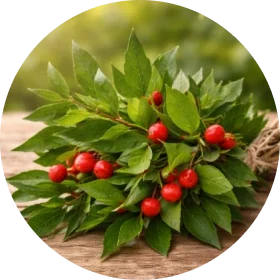
Butcher's broom root extract comes from the root of a small evergreen shrub, Ruscus aculeatus. It is the third ingredient the Flow Nerves sales page names, after magnesium glycinate and alpha-lipoic acid.
The European Medicines Agency (EMA) lists the plant as a traditional herbal medicine (EMA, Butcher’s broom (HMPC public summary)). Traditional means the use rests on long history, not on strong trials. The sales page prints no amount, no extract ratio and no marker percentage, so we cannot tell which kind of extract is in a capsule, or how much.
That matters because forms differ a great deal: powdered root, dry extracts of several strengths and standardized extracts all go by the same plant name. When someone searches for a butchers broom supplement, they find all of them. The Flow Nerves page tells them which one only by name. See how the six fit together on the ingredients page.
Traditional use
What is butcher's broom traditionally used for?
The EMA describes traditional use for leg discomfort tied to minor vein problems and for itching from haemorrhoids. It says the clinical evidence is insufficient.
| Plant part | Root (rhizome) of Ruscus aculeatus |
|---|---|
| Traditional uses named | Leg complaints linked to minor vein problems; haemorrhoid itching |
| Trial evidence | Called insufficient by the EMA |
| One study the EMA mentions | 12 weeks, 166 women, less foot and lower-leg swelling than placebo; the EMA called the benefit “not convincing” |
| Nerves, tingling, numbness | Not mentioned in any source we read |
Read the last row twice. The EMA's wording is about the veins of the legs. It is not about nerves, and it does not describe the sensations the sales page talks about. The brand writes of “that heavy, tingling, on edge sensation”, and we do not tie that wording to the EMA's leg-vein text, because nothing in the sources does.
A traditional plant with thin trial evidence for leg-vein complaints, in a capsule with no printed amount, sold under a banner about nerves. No source connects the first to the second.
Amounts in the monograph
What amounts does the EMA monograph list, and how do they compare with Flow Nerves?
The monograph lists amounts for products sold as traditional herbal medicines. Flow Nerves prints none, so no comparison is possible.
Powdered root
350 mg, three times daily, in the monograph's traditional-use entry.
Dry extracts
37 mg to 200 mg, one to three times daily, depending on the extract type.
Ruscogenins
7 to 11 mg a day, the marker compounds counted in some standardized products.
The monograph is for adults only, and it tells people to see a doctor if symptoms last longer than two weeks (EMA, Community herbal monograph on Ruscus aculeatus rhizoma (2008; copy hosted by e-lactancia.org)). We read it through a third-party copy of the PDF, because the EMA's own page was not available to us. These figures describe other products. They are not the Flow Nerves amount, which is not printed on what we saw, and they should never be read as a recommended amount for you.
The way a blend hides the figure is explained on the blend page. Our supplement facts page shows the rest of what is missing from the label.
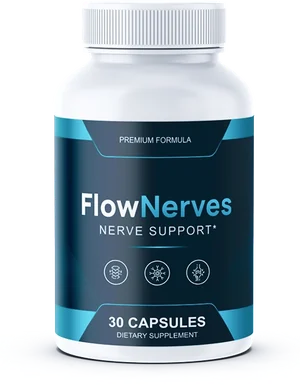
Flow Nerves: capsules, 30 per bottle2, 3 or 6 bottles · 60-day promise, confirm at checkout
See packsButcher's broom cautions
What are the cautions for a butcher's broom supplement?
The monograph lists no medicine interactions. That is an absence of reports, not proof that none exist.
It lists nausea, stomach complaints and diarrhoea as possible effects, and lymphocytic colitis as another. It does not recommend use in pregnancy or while breastfeeding. It also says tests for genotoxicity, carcinogenicity and reproductive toxicity have not been performed (EMA, Community herbal monograph on Ruscus aculeatus rhizoma (2008; copy hosted by e-lactancia.org)). Those gaps mean the safety record is thin, not that harm has been shown.
Sudden swelling in one leg, leg ulcers, skin inflammation, or heart or kidney insufficiency. The monograph advises consulting a doctor first in those cases. Sudden swelling of one leg with pain can be an emergency, so seek urgent medical care.
The pairing of butcher's broom and blood pressure medicine appears in some summaries online. We found no source for it, so we do not repeat it. The general advice in the FDA's guidance holds regardless: tell your pharmacist and doctor about every supplement, and keep taking prescribed medicine (FDA, Mixing Medications and Dietary Supplements Can Endanger Your Health). The fuller list of medicine cautions for all six ingredients is on the interactions page.
How to read it
How should you read a butchers broom supplement claim?
Ask four questions of any page that lists it, ours included.
What is the claim about?
If the claim is about legs and veins, the EMA text is the relevant source. If it is about nerves, ask for the source. We found none.
Which form is it?
Powder, dry extract and standardized extract differ. A name alone, such as “root extract”, does not say which.
What is the amount?
Without a milligram amount, no trial or monograph figure can be compared. A proprietary blend need not list one per ingredient (21 CFR 101.36 (eCFR), Supplement Facts and proprietary blends).
Who is it not for?
Pregnancy, breastfeeding, kidney or heart insufficiency and sudden leg swelling all appear in the cautions above.
Tingling or numbness in the legs has many possible causes, and a clinician checks them one by one. See peripheral neuropathy basics and claims versus evidence. If you order, use Order Flow Nerves and confirm the price, shipping and guarantee at checkout.
FAQ
Flow Nerves questions people ask
What is butcher's broom root extract?
It is an extract from the root of Ruscus aculeatus, a small evergreen shrub. The EMA lists it as a traditional herbal medicine for leg and vein complaints. Flow Nerves names it third among six ingredients and prints no amount.
Does butcher's broom help with nerves?
We found no source that says so. The EMA documents describe traditional use for the legs and haemorrhoids and call trial evidence insufficient. They do not mention nerves, tingling or numbness.
What does the research say about butcher's broom?
The EMA calls evidence insufficient. It mentions one 12-week study in 166 women that reported less foot and lower-leg swelling than placebo, and it called the benefit not convincing. No study tested Flow Nerves.
Are there butcher's broom cautions?
Nausea, stomach complaints, diarrhoea and lymphocytic colitis are listed, and use in pregnancy or breastfeeding is not recommended. Safety tests such as genotoxicity were not performed. Ask a doctor first if you have heart or kidney problems.
Does butcher's broom interact with medicines?
The monograph lists no medicine interactions, which means none were reported, not that none exist. We found no source for a blood pressure medicine pairing. Show the ingredient list to your pharmacist and keep taking prescribed medicine.
How much butcher's broom is in Flow Nerves?
We do not know. No amount, extract ratio or marker percentage is printed on what we saw. The EMA lists amounts for other products, and they should not be read as the Flow Nerves amount.
What is the difference between butcher's broom and Ruscus aculeatus?
They are the same plant. Butcher's broom is the common name and Ruscus aculeatus is the botanical name. The root is the part used in the extract named for Flow Nerves.
Who wrote this
Written and reviewed by
Pages built from the sales page and linked NIH, CDC, FDA, FTC and peer-reviewed sources.
Last updated . Read our editorial standards and how we check reviews. This website is the information site of a U.S. retail partner for Flow Nerves. It is not the manufacturer, and it is not the sales page where orders are placed. We earn money when you buy through our order links.
Keep reading
More about Flow Nerves
U.S. retail partner
Ready to try Flow Nerves?
Read the ingredient list, check with your pharmacist if you take any medicine, then pick a pack. Every pack comes with a 60-day satisfaction promise; confirm the live policy at checkout.
- Order on the sales page
- 60-day promise (confirm)
- Shipping shown at checkout